
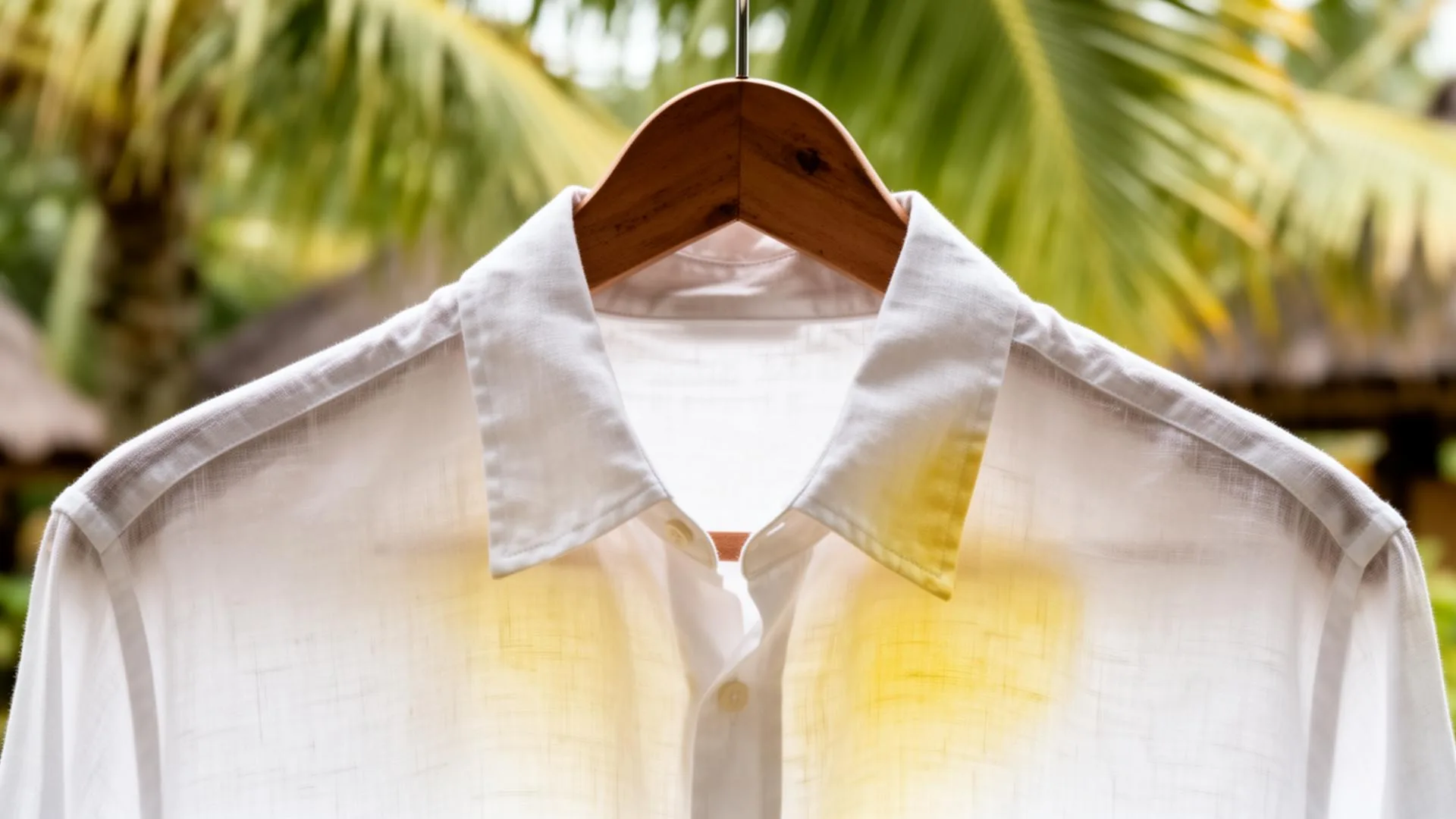
If you've lived in Bali for more than a couple of months, you've probably noticed it. Your favorite white t-shirt, the one that was crisp and bright when you arrived, looks a little tired. Maybe the collar is creamy instead of white. Maybe the whole shirt has a faint yellow-orange cast that was not there before. You have not done anything different. You are not lazy with your laundry. The water is doing it.
This article walks through why clothes turn yellow in Bali, why it tends to get worse if you rely on a standard laundry shop, and what you can actually do about it. The aim is to be useful even if you never use a service like ours, so think of it as a fabric care guide first and a CleanFold explainer second.
Why clothes turn yellow in Bali
The single biggest reason is the water supply. Most tap water and well water across Canggu, Berawa, Pererenan, Umalas and the rest of the area is hard, meaning it contains a relatively high level of dissolved minerals like calcium and magnesium. It also commonly contains dissolved iron, especially from groundwater wells. Iron is the part that matters most for yellowing.
When iron-rich water passes through your laundry machine, tiny amounts of iron get left behind on the fibers. Each wash deposits a little more. Over time, that iron oxidizes when exposed to air and light, and the chemical reaction shows up as a yellow or orange tint. On colored fabric it is harder to spot. On whites it is obvious, which is why the shirt that looked brilliant on day one looks dull a few months in.
This is not a sign that you are doing laundry wrong. It is not a detergent problem. It is a water-supply problem that affects almost everyone here, including the laundry shops themselves.
Why typical Bali laundry shops make it worse
Most neighborhood laundry shops in Bali wash everything together, in the same untreated water, on the same standard cycle, regardless of fabric. That keeps prices low and turnaround fast, which is great. But it also means three things stack up.
First, the iron-rich water hits every load. There is no filter step before the wash. Second, whites get tumbled in the same drums and dried in the same way as heavily soiled items, which transfers residue and accelerates discoloration. Third, items are often line-dried in direct, intense sun without rinsing residue fully. UV plus mineral residue plus heat is the perfect recipe for yellowing, especially on cotton and linen.
Add the fact that most shops do not separate delicate fabrics from regular loads, and you get not just yellowing but shrinking, snagging and stretched necklines on the items you cared most about.
How fast does it actually happen
People often ask whether this is something that takes years or weeks. In Bali, it is usually weeks. For a regular cotton t-shirt washed two to three times a week in untreated, iron-rich water, a faint cream tint can appear in under a month. A linen shirt dried in direct sun shows the change even faster, sometimes after only a handful of washes. The rate depends on how much iron is in the local supply, how hot the wash is, and how long the item sits damp before drying. The takeaway is simple. You do not need to wait until something is visibly ruined to act. If you have just arrived in Bali and your whites still look good, that is the right moment to start filtering the water or choosing a laundry service that already does.
What actually helps
You can slow yellowing significantly without doing anything exotic. Three things make the biggest difference.
1. Filter the water before washing. A whole-house or in-line filter that targets sediment and iron will dramatically cut the amount of metal hitting your fabric. If you wash at home, this is the single best investment you can make. If you use a service, ask whether they filter the water they wash with. Most do not.
2. Separate whites from colors, and delicates from regular loads. Whites are the most vulnerable to mineral and dye transfer, so they need to be washed alone in clean water and ideally with a slightly higher temperature setting. Delicates need a gentler cycle, less detergent and usually no dryer.
3. Choose indoor drying for items prone to discoloration or shrinking. Bali sun is intense and dries clothes quickly, but it also bleaches dyes unevenly, sets in any residual iron and shrinks natural fibers. Shaded indoor drying with airflow protects color, shape and brightness over the long run.
How CleanFold's process addresses each of these
This is the part where most articles would start selling. Instead, here is what we actually do, point by point.
We filter the water we wash with. Bali's standard groundwater goes through a sediment and iron filter before it ever touches your clothes, which removes the main cause of yellowing on whites.
Every item is inspected at intake. A staff member looks at each piece for fabric type, existing stains and any care label that requires special handling. Items that should not go in a dryer or a regular cycle get flagged before washing, not after. You can read more about that on our process page.
Delicates and items with shrinking risk are routed to our Special Care service, which uses a gentle hand wash and indoor drying instead of a tumble dryer. This protects wool, silk, linen and anything you would rather not see come back two sizes smaller.
Stain treatment is opt-in, not automatic. You can choose to have us treat stains automatically, or ask us to check with you first. Either way, we photograph stains at intake and update you on the result before delivery, so you are never surprised.
What you can do between laundry visits
If you would rather handle most of this yourself, here are a few habits that meaningfully slow yellowing and fabric wear in a Bali climate.
- Store white garments away from direct sun. A closet or covered drawer keeps UV from setting in any residual mineral content. Open shelving in a sunny villa is one of the fastest ways to yellow whites between washes.
- Do not mix heavily soiled items with lighter loads. Surf shorts, kitchen towels and gym wear deposit oils and dirt that transfer onto cleaner fabric in the same drum.
- Air dry whites in the shade, not direct sun. A breezy covered area dries clothes almost as fast in Bali humidity and protects color over time.
- Wash whites a little hotter, occasionally. A warm wash every few cycles helps lift mineral and oil buildup that cold washes leave behind.
- Skip fabric softener on athletic wear and towels. Softener coats fibers and traps both odor and minerals, which makes yellowing and smell worse over time.
- Do not let damp laundry sit. Humidity plus warmth plus damp fabric grows the bacteria responsible for that musty smell, and bacterial residue can also stain.
None of these require special products. They are just small habits that make a noticeable difference after a month or two.
If you would rather not think about any of this
If you would rather just send your laundry somewhere that already filters the water, inspects each item and gives delicates the right treatment, that is exactly what we built CleanFold for. You can place an order online, set your preferences once (no fabric softener, no fragrance, indoor drying for delicates, anything you want) and we apply them automatically every time. No yellowing surprises, no shrunk linen, no guessing.